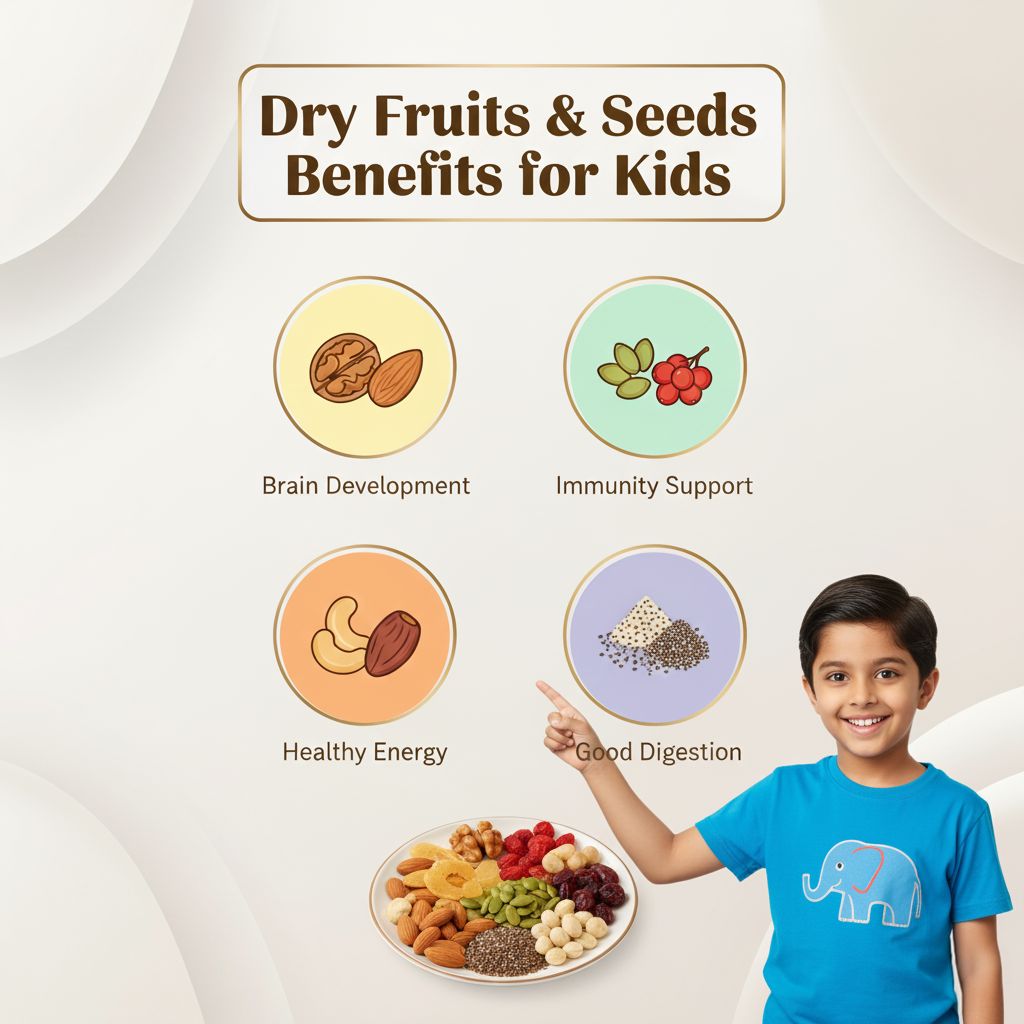
Dry fruits are nutrient-dense foods that provide children with energy, vitamins, minerals, fiber, and healthy fats. Even in small quantities, they support brain development, immunity, digestion, and overall growth.
Knowing the ideal daily dry fruit intake for children helps parents avoid overeating while ensuring kids receive the full benefits.
Ideal Daily Dry Fruit Intake for Children (By Age)
✔ Ages 1–2 years
-
5–10 grams per day
-
Only finely powdered or paste form
-
Avoid whole nuts due to choking risk
✔ Ages 3–5 years
-
10–15 grams per day
-
Softened raisins, chopped dates, powdered nuts
✔ Ages 6–12 years
-
15–25 grams per day
-
Mix of almonds, cashews, raisins, figs, dates, pistachios, walnuts
✔ Teens (13–18 years)
-
20–30 grams per day
-
Ideal for growing bodies and higher physical activity levels
Quick Rule:
A child’s daily dry fruit portion should be a small handful or about 1–2 tablespoons.
Best Dry Fruits for Kids (and Their Benefits)
Almonds
Boosts memory, concentration, and brain development.
Walnuts
High in Omega-3 fatty acids for brain and heart health.
Raisins
Rich in iron and fiber; helps with digestion.
Dates
Natural energy booster and great source of minerals.
Pistachios
Supports eye health and protein intake.
Cashews
Good for bones and overall growth.
Figs (Anjeer)
Excellent for digestion.
How to Add Dry Fruits to Your Child’s Daily Diet
-
Add chopped nuts to porridge, kheer, or curd
-
Mix raisins into lunchboxes
-
Give Kids Delight or Kids Choco Delight (sugar-free) as a ready snack
-
Blend nuts into smoothies for picky eaters
-
Pack a small dry fruit mix in school snacks
👉 HealthyCrave Cuisine products make this easier:
-
Kids Delight – Dry fruit laddus with dates, berries, nuts, seeds
-
Kids Choco Delight – Sugar Free – Chocolate + dry fruits
-
Kids Choco Delight Mango – Real mango + dark choco + nuts
How Much Is Too Much?
Dry fruits are healthy but calorie-dense. Overeating can cause:
-
Heat in the body
-
Constipation
-
Allergies in sensitive children
-
Unnecessary weight gain
Stick to the ideal daily dry fruit intake for children to avoid excess.
Safety Tips for Parents
-
Introduce one dry fruit at a time for allergy check
-
Avoid salted or sugar-coated variants
-
For kids under 4, prevent whole-nut choking risk
-
Store dry fruits in airtight containers
FAQs
1. Can toddlers eat dry fruits daily?
Yes, in powdered or paste form only.
2. Can children eat dry fruits at night?
Better to give in the morning for improved digestion and energy.
3. Is chocolate-coated dry fruit healthy?
Only when sugar-free, like HealthyCrave’s Kids Choco Delight.
4. Are raisins better than nuts?
Both have benefits. Raisins help digestion; nuts support brain growth.
5. What’s the best time to give dry fruits?
Morning or in tiffin boxes for school.
6. Can I mix many dry fruits together?
Yes, a small mixed portion works great.
7. Should walnuts be soaked for kids?
Soaked walnuts are easier to digest.
8. Can picky eaters enjoy dry fruits?
Yes — try Kids Delight laddus or Kids Choco Delight (no added sugar).
-
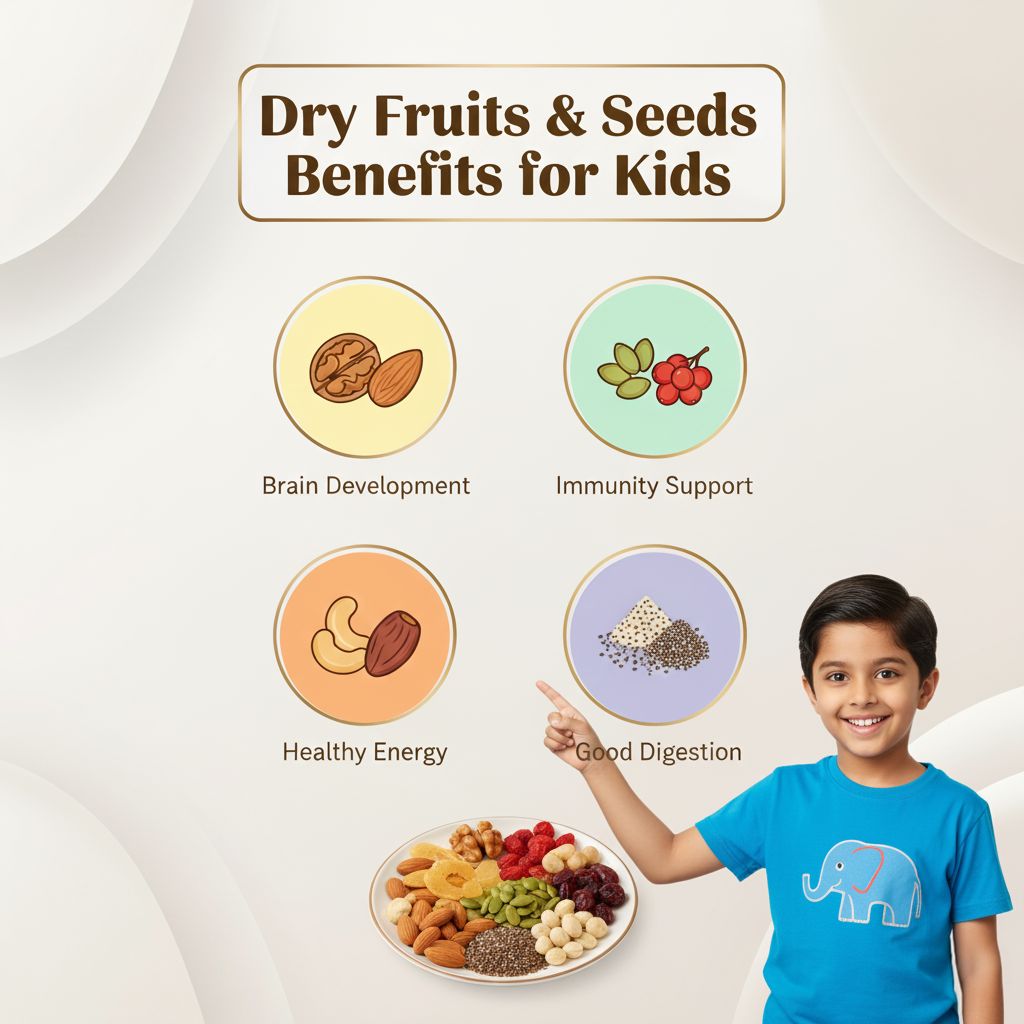
Dry fruits benifit Here are credible references supporting nutrition benefits of dry fruits for children:
-
American Academy of Pediatrics – Safe Ways to Introduce Nuts to Kids
https://www.healthychildren.org/English/ages-stages/baby/feeding-nutrition/Pages/Peanut-Allergies-What-You-Should-Know.aspx -
Cleveland Clinic – Benefits of Nuts for Children
https://health.clevelandclinic.org/the-benefits-of-nuts/ -
NHS – Healthy Snacks for Kids & Portion Guidance
https://www.nhs.uk/healthier-families/food-facts/healthier-snacks/
https://www.hsph.harvard.edu/nutritionsource/what-should-you-eat/nuts-and-legumes/